
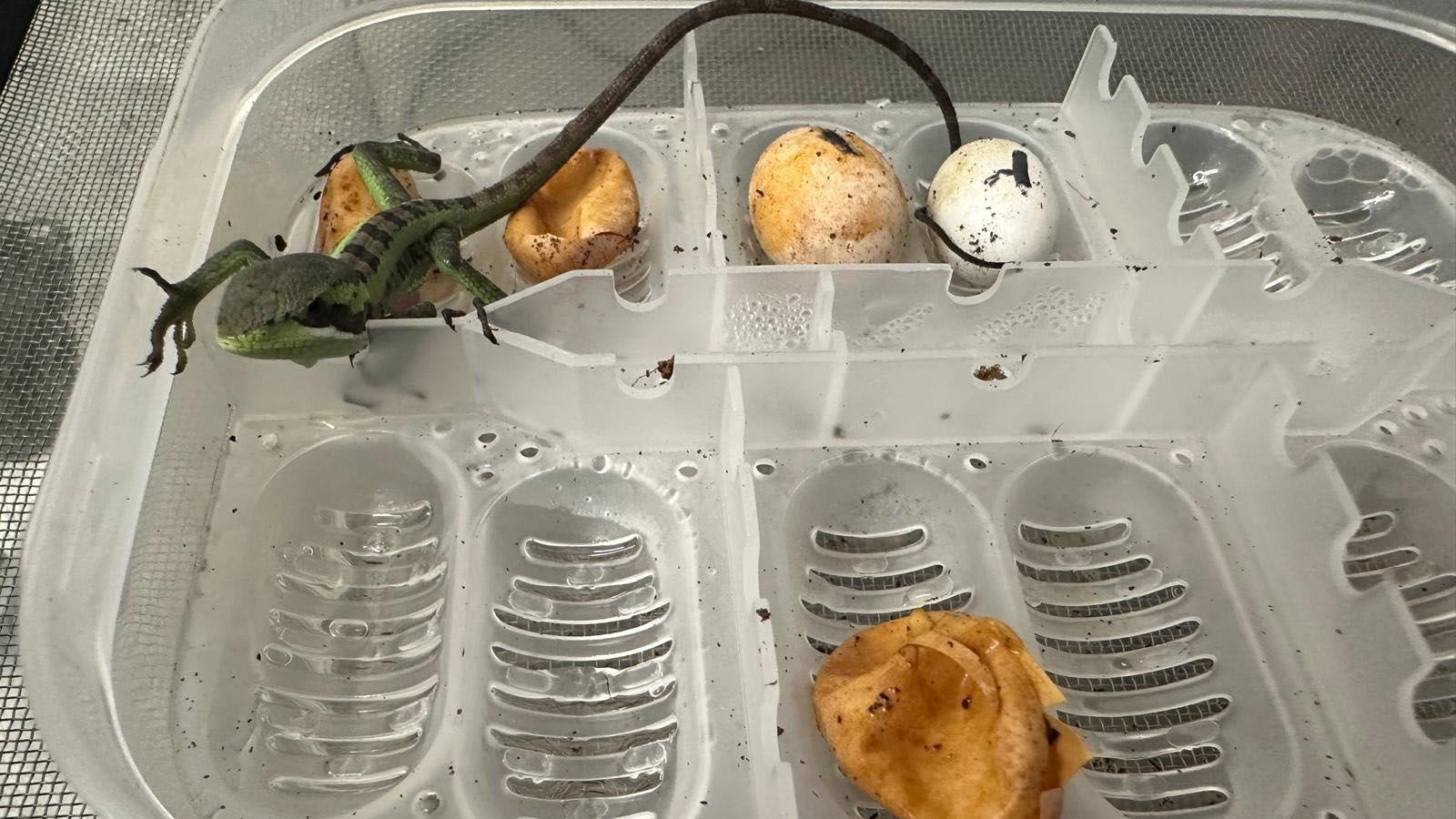
A female casque-headed iguana at Exotic Zoo in Telford, Shropshire, has produced eight hatchlings despite never being kept with a male. The zoo described the phenomenon — known as parthenogenesis — as an exceptionally rare occurrence in the animal kingdom.
Parthenogenesis occurs when an embryo develops from an unfertilised egg, effectively creating a genetic clone of the mother. While this reproductive strategy has been recorded in only a small number of reptile species, it has now been documented in this Central and South American lizard, whose wild populations are under pressure from habitat destruction and illegal collection for the pet trade.
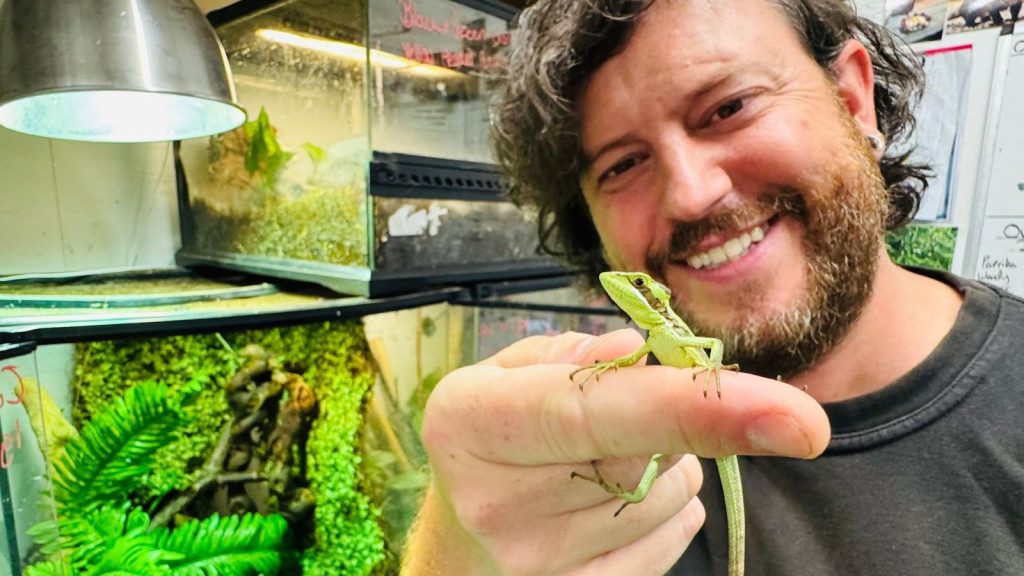
Scott Adams, the zoo’s director, told Sky News the discovery initially shocked staff. “When we confirmed the eggs were fertile without any contact with a male, our jaws hit the floor,” he said, calling it “nature’s self-conservation.” The zoo has described the newborns as “mini-mum clones” and says they are receiving round-the-clock care before being introduced to the public and later transferred to other zoos.
Beyond the novelty, the zoo views the event as an educational opportunity. “This story lets us talk to visitors about genetics, evolution, and the pressures reptiles face in the wild,” Adams noted.