
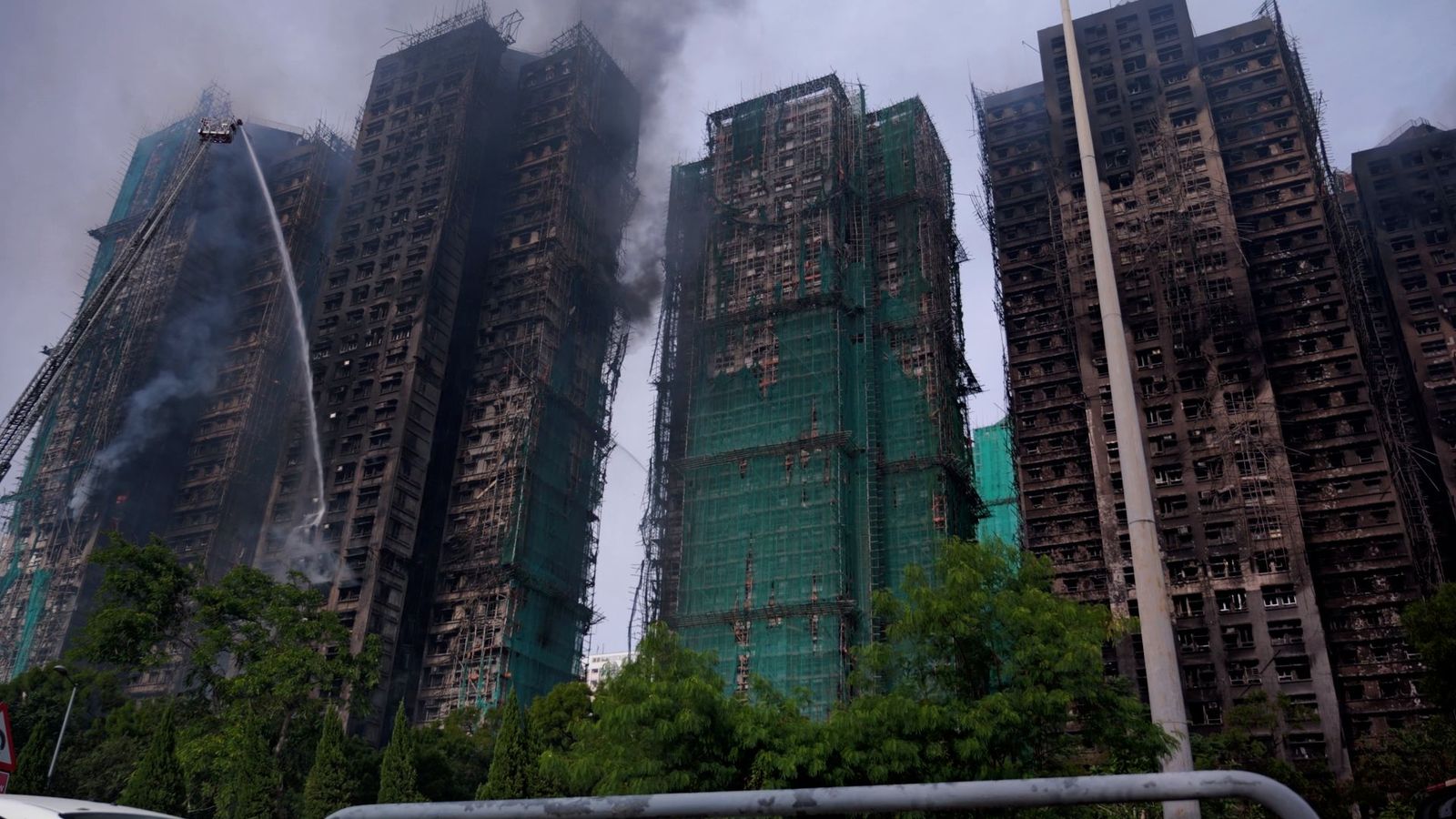
Seven of the eight residential towers in the complex now stand as charred silhouettes. Through the gaping openings where windows once framed daily life, the mind is left to fill in the terror that unfolded inside — moments of confusion, calls for help that never reached safety.
More than a full day after the first flames erupted, the fire still refused to settle. Throughout the afternoon, new bursts of orange flared from scattered floors, suggesting that hidden pockets of fuel continued to feed the blaze. Pieces of the towers broke away at intervals; a slow snow of ash drifted over nearby streets. By Friday morning, authorities confirmed 94 deaths, a number that weighs heavily on the city.

The surrounding community has been shaken to its core. Hundreds gathered around the cordoned streets, many watching in stunned silence. Every so often, that quiet cracked open with the anguished cries of families who had just received the news they feared. Most grief, however, remained muted — a hand held tightly, a wordless embrace.
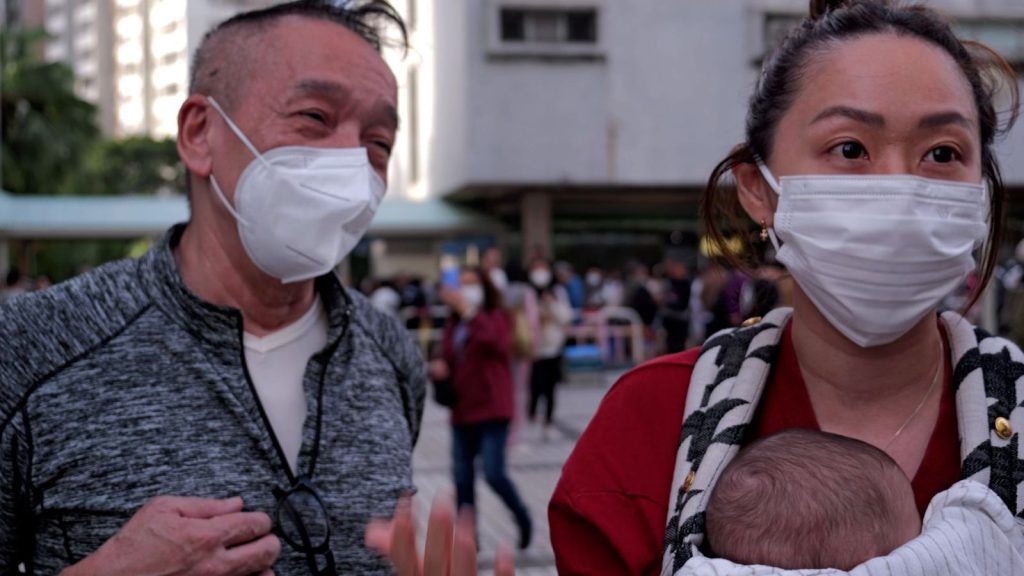
The Lam family, who had lived in the building across three generations, escaped but lost their home and have not heard from neighbors. Ms. Lam said the fire alarms had been disabled due to exterior renovation work, leaving residents unaware of the danger. Many older residents were napping when the fire began. “By the time they realised, the fire had already taken everything. They had nowhere to go,” she said. “It’s a tragedy.”
Another survivor described feeling emotionally adrift: “Sadness, hopelessness… I can’t explain it.”
Hong Kong’s density has always magnified the risks of urban fires, and this disaster underscores how quickly calamity can cascade in tightly packed housing. More than 4,500 residents from this complex alone now require emergency shelter. While the government has offered temporary housing, much of the immediate support has come from volunteers distributing food, water, and basic necessities. Some displaced residents slept on the floor of a nearby shopping center; one man said he preferred staying close to home because he no longer trusts official assistance.
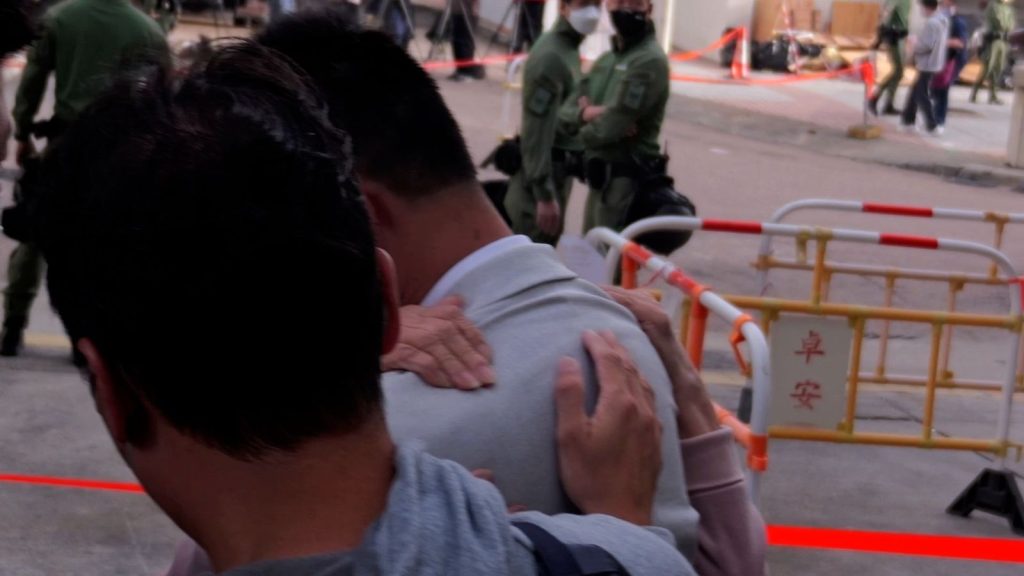
Grief here seems to be slowly hardening into anger. Public frustration is focused on the construction company conducting major renovation works at the time — especially the materials used: mesh netting, bamboo scaffolding, and polystyrene, all of which may have accelerated the spread. Three company executives have already been arrested. But discontent doesn’t stop there; many residents say this disaster exposes broader systemic failures. Several people insisted on wearing masks, not just for ash but for fear of repercussions, and spoke cautiously about long-standing distrust in the authorities.
This blaze has become the deadliest catastrophe in Hong Kong’s modern era. Many of those lost were elderly. Many of those who survived now face an uncertain future, carrying both the trauma of escape and the weight of what was left behind.