Russia’s ability to send crews into orbit has been thrown into uncertainty after damage was discovered at the country’s only human-rated launch pad—a development that could ripple into its long-running partnership with NASA on the International Space Station.
The issue stems from the November 27 liftoff of Soyuz MS-28 from the Baikonur Cosmodrome in Kazakhstan. The spacecraft successfully carried cosmonauts Sergey Kud-Sverchkov and Sergei Mikaev, along with NASA astronaut Chris Williams, to the ISS. But a routine post-launch review revealed that the pad suffered unexpected harm. According to early reports, part of the servicing structure that allows technicians to reach the rocket’s engines broke away and dropped into the trench designed to channel exhaust.
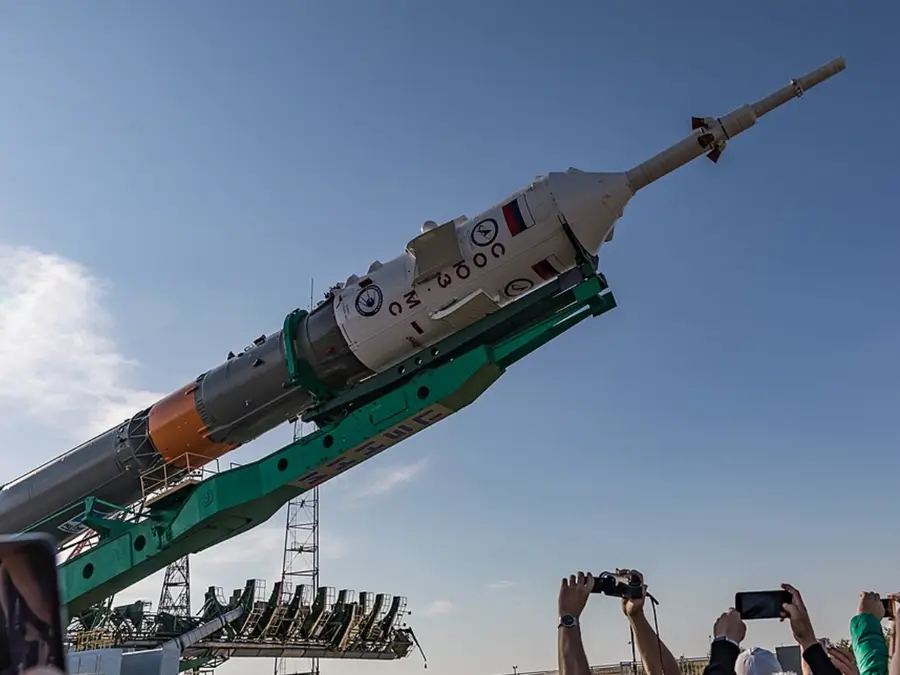
Roscosmos has avoided detailing the extent of the problem, saying only that specialists are evaluating the situation and that repairs are expected. No completion date has been offered. Until the pad is restored, Russia has no functional site from which it can launch crews, leaving its human spaceflight program temporarily grounded.
NASA, which relies on a rotation of U.S. and Russian vehicles to keep the ISS staffed, acknowledged the setback. A spokesperson told Futurism that the agency is in close communication with international partners, including Roscosmos, to maintain the station’s safety and continuous operation.
The uncertainty leaves analysts wondering how quickly Russia can—or intends to—bring Baikonur’s infrastructure back online. Relations between Washington and Moscow have deteriorated sharply due to the war in Ukraine, yet both sides have kept their ISS cooperation largely intact. With Soyuz flights now paused, the only currently active spacecraft capable of ferrying crew to the station is SpaceX’s Dragon.
Baikonur itself carries decades of history. Built in the late 1950s, it became a cornerstone of the Soviet space program. After the USSR dissolved, Kazakhstan agreed to lease the facility to Russia for roughly $115 million each year. Stepping away from Baikonur would free up substantial funds—money Russia has hinted it may redirect toward creating its own independent orbital outpost.