
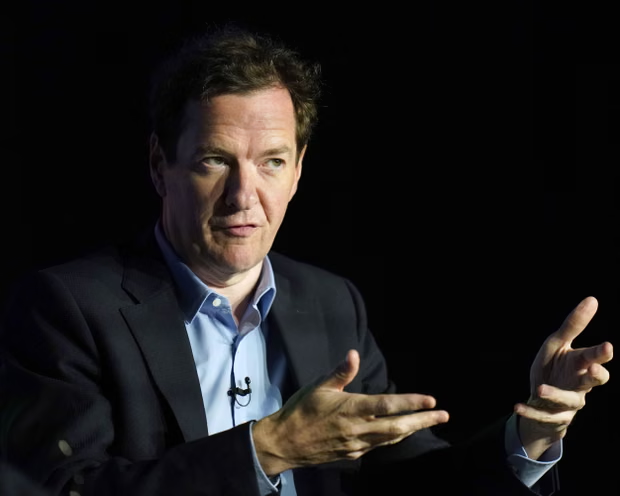
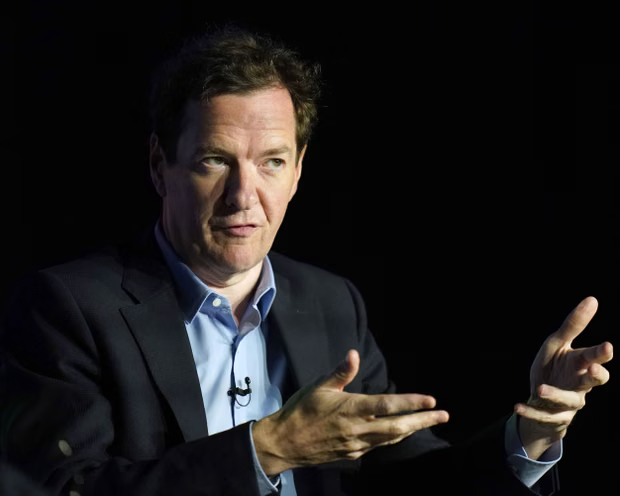
Former UK chancellor George Osborne has urged governments to accelerate adoption of advanced artificial intelligence systems, cautioning that countries which delay could face economic and strategic disadvantages.
Speaking at the fourth intergovernmental AI summit in Delhi, Osborne—who recently joined the US-based AI company OpenAI to lead its “for countries” initiative—told delegates that nations risk falling behind if they fail to deploy powerful AI technologies. He suggested that slower adoption could weaken economies and make it harder to retain skilled workers, who may seek opportunities in more technologically advanced markets.
Osborne framed the global AI landscape as being largely shaped by the United States and China, which he described as the two leading developers of cutting-edge systems. Countries outside those two powers, he said, face a dual challenge: ensuring they benefit from rapid technological change while preserving national sovereignty when relying on platforms developed abroad.
The summit, hosted by Indian prime minister Narendra Modi, follows previous meetings in the UK, South Korea and France. This year’s discussions have focused on expanding AI’s benefits to countries in the global south, including through the development of tools in regional languages and applications in agriculture and public health. Delegates have also debated safety standards, amid concerns from some researchers that existing governance frameworks may not adequately address risks posed by increasingly advanced systems.
In remarks aligned with Washington’s strategic priorities, White House AI adviser Sriram Krishnan said the US administration aims to ensure global uptake of American AI models. He also criticised the European Union’s regulatory approach, arguing that the bloc’s AI legislation could hinder innovation.
However, several technology leaders and policymakers from Africa challenged the notion that AI development would remain concentrated in the US and China. Mark Surman, head of Mozilla, said it was mistaken to assume that only the two superpowers could build large-scale AI systems, suggesting that such a narrative primarily benefits companies based in those countries.
Officials from African governments outlined alternative strategies. Kevin Degila, who oversees AI and data at Benin’s digital agency, said his country was developing public-sector AI tools that combine American and Chinese technologies with locally curated language datasets. He noted that many global AI platforms do not adequately serve rural communities, including farmers.
Rwanda’s minister of ICT and innovation, Paula Ingabire, said her government was pursuing partnerships with AI firms but sought to avoid long-term dependency on foreign providers.
Also addressing the summit was former UK prime minister Rishi Sunak, who now advises AI company Anthropic and Microsoft. Sunak encouraged political leaders to treat AI deployment as an immediate priority, arguing that heads of government should take direct responsibility for overseeing its integration to ensure their countries capture potential economic and social benefits.
The summit underscored ongoing tensions between technological competition, regulatory oversight and national autonomy, as governments weigh how best to participate in what many describe as a transformative phase in global innovation.