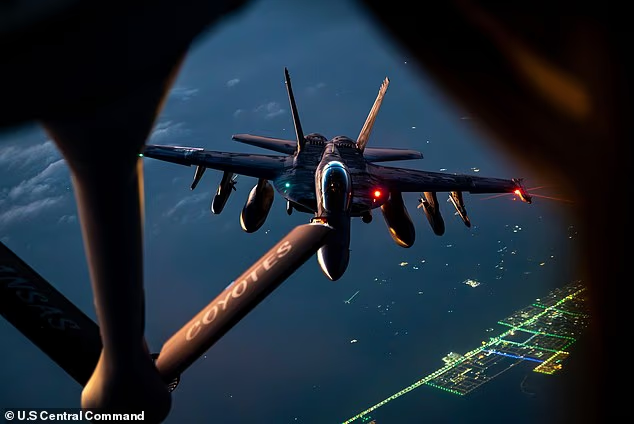
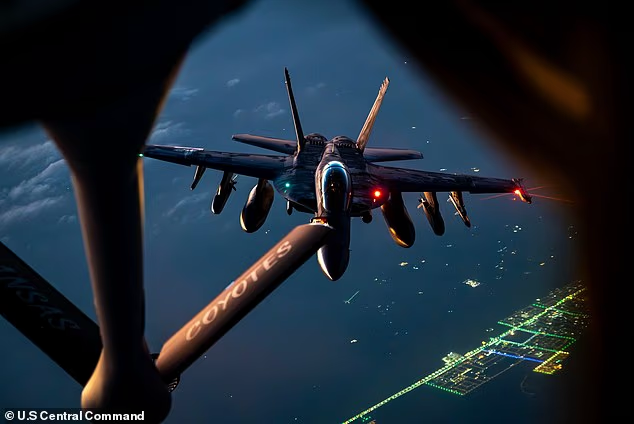
A search and rescue operation is underway in western Iraq after a United States military refuelling aircraft crashed following what officials suspect was a mid-air collision during operations connected to the ongoing conflict with Iran.
The aircraft was part of US military activities in the region and went down during the 13th day of escalating hostilities. According to the United States Central Command, two aircraft were involved in the incident. One of them was reported lost, although officials said there is no evidence that enemy fire or friendly fire caused the crash.
One of the aircraft was identified as a Boeing KC‑135 Stratotanker, a refuelling tanker that normally operates with a three-person crew. Sources indicated that the second aircraft involved managed to land safely in Israel.
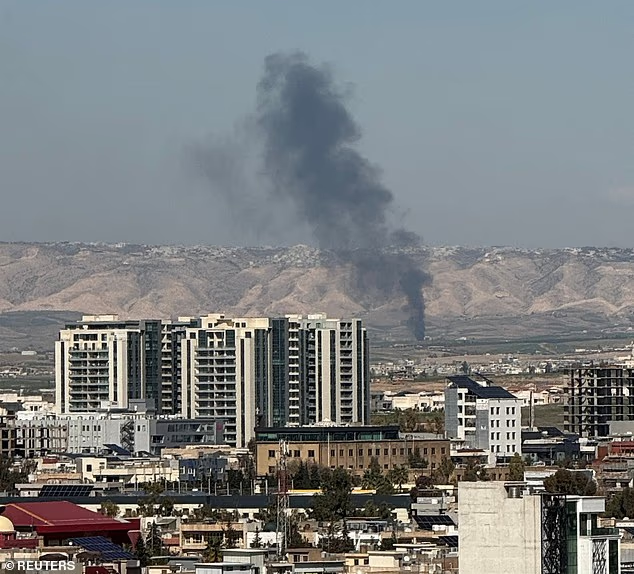
The incident occurred as Iraq increasingly becomes a focal point of military activity in the wider Middle East conflict. On Wednesday, a drone strike killed a French soldier stationed in the country, while another drone attack targeted a base used by British special forces.
The French casualty occurred during an attack on a joint facility in Iraqi Kurdistan used by French forces and Kurdish fighters from the Peshmerga. The strike involved two drones and left five additional soldiers injured. Emmanuel Macron confirmed the death on Friday.
Earlier the same day, drones believed to be launched by Iran targeted a British special forces base in Iraq. The attack on the camp near Erbil in northern Iraq was intercepted by British troops using the Martlet missile system.
The confrontation followed other recent incidents in the region, including attacks on RAF Akrotiri, increasing concerns that the conflict could expand further and draw additional countries more directly into hostilities.
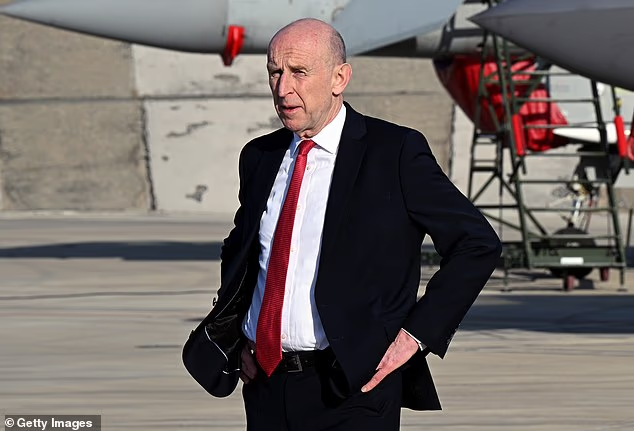
UK Defence Secretary John Healey suggested that Russia may be indirectly supporting Iran’s military actions, accusing Vladimir Putin of playing a covert role in coordinating or enabling some operations. Healey argued that similarities between Iranian and Russian drone tactics indicate growing cooperation between the two countries.
He said the scale of Russia’s drone warfare in Ukraine—reportedly involving tens of thousands of drones—demonstrates a pattern of tactics that Iran has also adopted.
The UK government has so far limited the role of its forces in the region. Under rules set by Prime Minister Keir Starmer, British troops are authorized to intercept incoming rockets but are not permitted to directly target launch systems.
Meanwhile, Royal Air Force aircraft have been conducting operational flights over several regional countries, including the United Arab Emirates, Jordan, and Qatar, as the United Kingdom expands its involvement in defensive operations related to the crisis.
The conflict is also raising economic concerns. Officials warn that instability could threaten shipping through the Strait of Hormuz, a critical passage for global oil exports. A closure of the strait could push oil prices above $100 per barrel, a scenario analysts say would benefit Russia, whose economy relies heavily on energy exports.
In response to growing tensions in the Middle East, the UK has reassigned some military assets from other regions. The Royal Navy destroyer HMS Dragon, which had been scheduled for operations in northern waters as part of NATO activities, was redeployed after departing Portsmouth earlier this week.
The developments underline the increasing complexity of the regional crisis, with multiple international forces now involved as tensions between Iran and Western allies continue to escalate.