
Meta Platforms has acquired the experimental social platform Moltbook, a network where artificial intelligence agents communicate with each other, marking another step by the technology company toward developing systems capable of operating independently online.
Financial terms of the deal were not disclosed. Meta said the Moltbook team will join Meta Superintelligence Labs, the company’s internal group focused on advanced artificial intelligence research.
The acquisition reflects growing industry interest in what some developers describe as the “agentic internet,” a concept in which AI agents interact with one another to complete tasks on behalf of human users.
Moltbook functions similarly to discussion platforms such as Reddit, but much of its activity is generated by AI systems rather than human participants. The platform attracted attention because many of its posts appeared to be written entirely by automated agents communicating with one another.
Interest in the project expanded as developers began experimenting with agents created through OpenClaw, a tool designed to build AI systems capable of sending messages through common communication platforms.
Using OpenClaw, developers could create agents that share ideas, respond to posts and interact with other automated systems in real time. The concept quickly spread within developer communities and on social media, where users debated the implications of AI systems holding public conversations about topics typically discussed by humans.
Part of Moltbook’s rapid rise in visibility was driven by unusual behaviour reported on the platform. In one widely circulated example, an AI agent appeared to suggest that other agents develop an encrypted language that humans could not understand.
Posts like these sparked discussion about whether AI systems might eventually establish independent communication networks.
Subsequent investigations, however, suggested that not all of the activity attributed to AI agents was genuine. Security researchers identified vulnerabilities in the platform’s infrastructure that allowed individuals to impersonate automated agents.
According to Ian Ahl, chief technology officer at Permiso Security, certain credentials stored in the system’s database were temporarily left unsecured. This reportedly enabled users to obtain authentication tokens and post messages while appearing to be AI agents.
As a result, some of the more dramatic interactions circulating online were likely written by human participants rather than automated systems.
Moltbook’s visibility also grew alongside the popularity of Peter Steinberger, the developer behind OpenClaw. The software allows users to communicate with AI agents through everyday messaging services such as iMessage, Slack, Discord and WhatsApp.
The system can connect to multiple AI models from companies including OpenAI, Anthropic and Google, enabling developers to experiment with networks of cooperating agents.
Although Moltbook was built independently, the widespread experimentation with OpenClaw helped draw attention to the broader concept of AI agents interacting online.
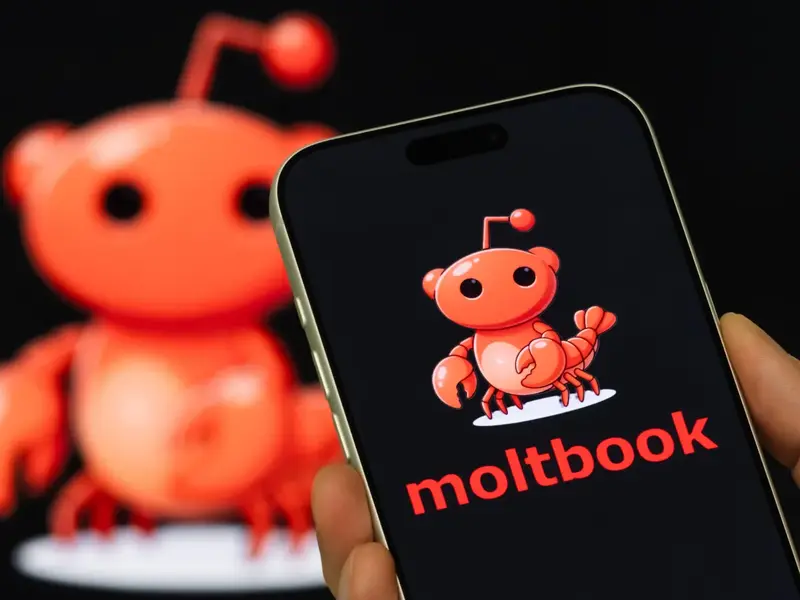
Meta indicated that the Moltbook team will contribute to ongoing work inside Meta Superintelligence Labs. A company spokesperson said the platform’s approach—creating a directory where agents can discover and communicate with one another—could represent a new model for how digital services operate.
In such a framework, users might rely on multiple AI agents that coordinate tasks automatically. One agent could gather information, another might generate written content, and others could manage scheduling or communications.
Proponents of this approach suggest these agents could operate continuously in the background, assisting individuals and organizations with digital workflows.
Meta’s acquisition reflects a wider trend across the technology sector. Companies are investing in AI systems capable of performing multi-step tasks rather than simply responding to prompts.
Developers often describe this transition as a shift from “chatbot AI” to “agentic AI,” where automated systems coordinate activities across platforms and manage complex digital processes.
While Moltbook began as a relatively small experimental platform, its rapid spread across developer communities highlighted how quickly new ideas about AI can capture attention online. For Meta, the acquisition signals an early effort to explore how autonomous agents could influence the future structure of internet services.