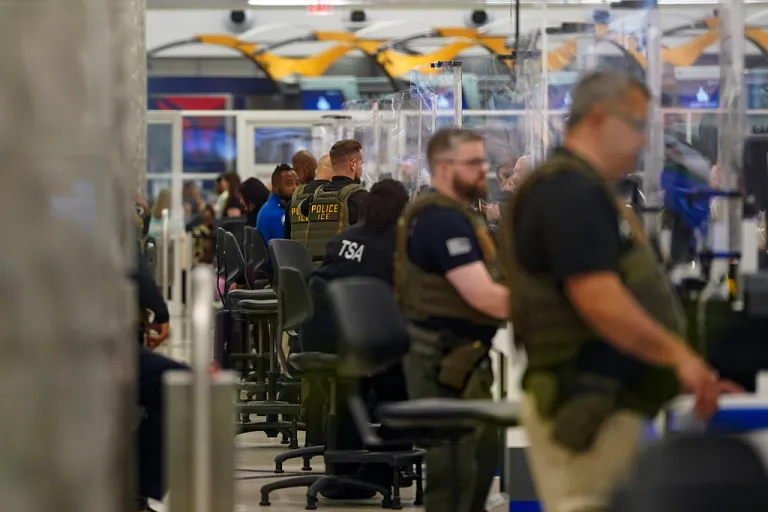
The Trump administration’s decision to deploy Immigration and Customs Enforcement (ICE) agents to U.S. airports—reportedly to assist the Transportation Security Administration (TSA) amid staffing shortages—has prompted widespread scrutiny and mixed assessments of its effectiveness.
According to various reports, some airports have experienced reduced wait times, while others continue to face long lines and operational challenges. This has led to uncertainty about the role ICE agents are playing, with some observers questioning whether they are actively contributing to screening operations or serving in a more limited, observational capacity.
A related point of attention is President Donald Trump’s recent statement urging ICE agents not to wear masks while assisting at airports. In a post on Truth Social, Trump expressed support for mask use during enforcement operations involving serious criminal suspects, but requested that agents forgo masks when helping address airport disruptions.
This position marks a shift from earlier administration arguments in favor of allowing federal agents to conceal their identities. Officials had previously maintained that masks were necessary to protect agents from potential harassment or identification, particularly amid heightened tensions surrounding immigration enforcement. Legal action had also been taken by the Department of Justice challenging state-level restrictions on masked federal agents.
The rationale for the apparent change in guidance remains unclear. ICE agents continue to be involved in immigration-related enforcement activities, including at transportation hubs, raising questions about why masking policies would differ in this context.
At the same time, broader concerns persist regarding staffing and compensation within the TSA. Reports indicate that tens of thousands of TSA employees have been working without pay during the ongoing government shutdown, while ICE agents remain salaried due to prior congressional funding allocations. This discrepancy has drawn criticism from labor representatives, who argue that addressing TSA staffing shortages directly may be more effective than supplementing personnel with agents from other agencies.
Additional reports suggest that ICE personnel have begun assisting with tasks such as identification checks and elements of passenger screening—duties traditionally carried out by TSA officers with specialized training. This has raised further questions about operational protocols and the scope of responsibilities assigned to ICE agents in airport settings.
As the situation develops, policymakers, labor groups, and travelers alike continue to evaluate the impact, consistency, and safety implications of the administration’s approach to airport security and immigration enforcement.