Nicolás Maduro Guerra, son of former Venezuelan president Nicolás Maduro, has expressed trust in the United States judicial system while simultaneously raising concerns about the legal proceedings against his father. In a remark in Caracas, he said he believed in the integrity of U.S. courts but argued that the case itself was fundamentally compromised from the outset.
Maduro Guerra contended that the circumstances surrounding his father’s arrest undermine the legitimacy of the trial. He characterized the operation that led to Maduro’s detention as unlawful, echoing longstanding claims by the former leader and his legal team that the process violated international norms.
His comments come as Maduro and his wife, Cilia Flores, appeared before a federal court in New York on March 26, facing charges related to drug trafficking and alleged links to narcoterrorism. Both have pleaded not guilty and deny all accusations.
The latest court session did not set a trial date and instead focused heavily on a dispute over legal representation. Defence attorneys argued that U.S. sanctions restricting access to Venezuelan state funds have limited the couple’s ability to secure counsel of their choice, potentially infringing on their legal rights. Prosecutors rejected this argument, maintaining that sanctions policy cannot be overridden by the court.
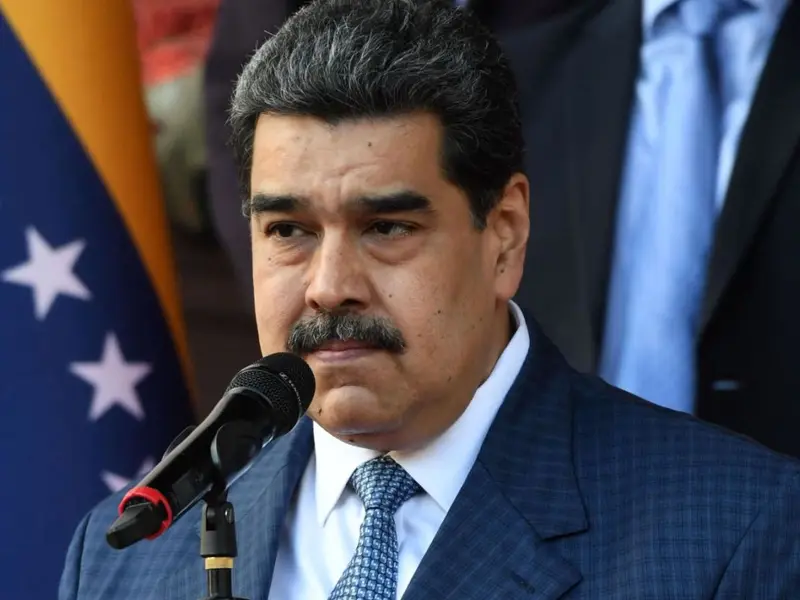
Judge Alvin Hellerstein acknowledged the complexity of the issue, emphasizing the importance of defendants’ rights in choosing legal representation. He suggested that access to certain funds might be warranted and questioned whether national security concerns remain applicable given that Maduro and Flores are already in U.S. custody.
However, government lawyers maintained that the judiciary does not have the authority to compel the U.S. Treasury to ease sanctions restrictions. They also challenged the premise that Venezuelan state resources should be used for the defence, arguing that such funds are not available for that purpose.
The judge pressed both sides to clarify potential solutions, underscoring the unusual legal and political dimensions of the case. No immediate decision was reached, and further proceedings are expected, though no date has yet been announced.
Following the hearing, Maduro appeared calm as he left the courtroom with his wife, briefly interacting with his legal team. The case, which follows his capture by U.S. forces earlier this year, continues to attract international attention and raises broader questions about jurisdiction, sanctions policy, and the application of U.S. law in cross-border cases.