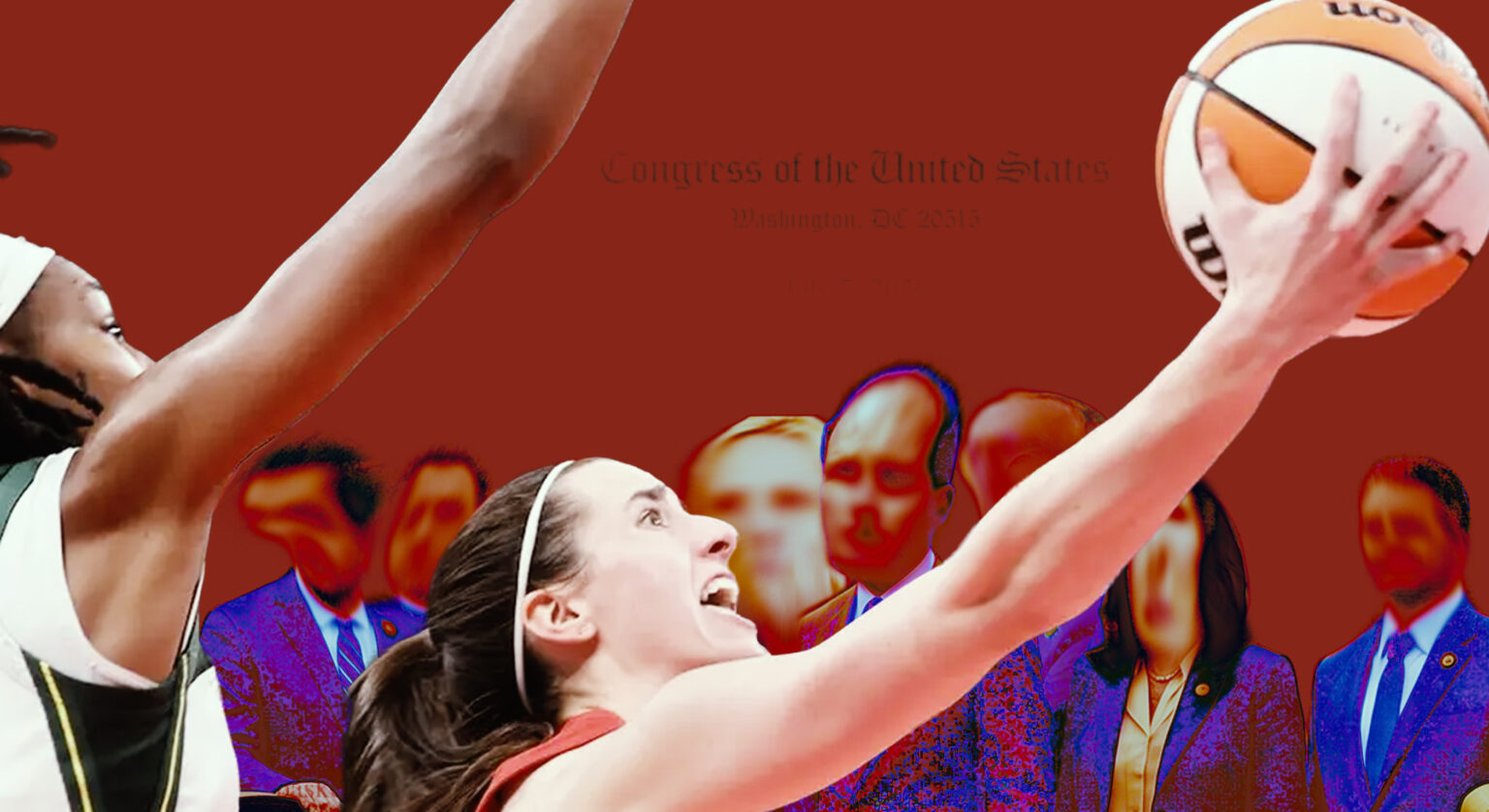
The debate surrounding Caitlin Clark has evolved far beyond basketball, becoming entangled in politics, race, and the broader cultural battles surrounding the WNBA. Critics argue that recent efforts by lawmakers to frame on-court physical play involving Clark as potential racial discrimination risk inflaming tensions rather than addressing genuine concerns.
A group of 11 Republican members of Congress, led by Texas Representative August Pfluger, recently urged WNBA Commissioner Cathy Engelbert to examine whether repeated fouls committed against Clark could amount to racial discrimination. Their letter suggested that, if evidence of discrimination or retaliation exists, federal agencies—including the Department of Justice, the Department of Labor, and the Equal Employment Opportunity Commission—should consider investigating possible violations of civil rights laws.
The proposal has drawn criticism from observers who view it as an unwarranted political intervention into professional sports. Longtime WNBA supporter Stephanie Christmas, who has followed the league since its inaugural 1997 season, questioned the involvement of elected officials in basketball matters.
“If you want only one player to play the game, that’s not basketball anymore,” Christmas said, arguing that political interference only adds pressure to players and distracts from the competition itself.
The controversy reflects a broader divide that has followed Clark throughout her rapid rise to stardom. While she has become one of the league’s biggest attractions, critics argue that some supporters have turned ordinary moments of competition into flashpoints, particularly when Black players are involved.
Several incidents this season have fueled those concerns.
During a June matchup between the Indiana Fever and the Phoenix Mercury, Clark and Mercury forward Alyssa Thomas battled for a loose ball, with Thomas’ arm briefly making contact with Clark’s neck. Although officials initially allowed play to continue, the league later upgraded the play to a Flagrant 1 foul and suspended Thomas for one game.
The aftermath extended far beyond basketball. Thomas reported receiving racist messages and death threats on social media, prompting her to publicly criticize league leadership for what she described as a delayed response to the abuse.
“We still have yet to hear anything from Cathy,” Thomas said following her suspension. “You can see what’s being said on social media. It’s unfortunate… our lives are being threatened.”
Only after Thomas’ public comments did Engelbert issue a statement condemning the harassment.
“The WNBA vehemently condemns any and all forms of hate,” Engelbert said, adding that the abuse directed at Thomas and her teammates was “completely unacceptable” and inconsistent with the league’s values.
Another controversy followed weeks later when Las Vegas Aces guard Chelsea Gray became the target of online abuse after a foul involving Clark. During the play, Gray was fouled by Clark while driving to the basket. Although Clark protested the call, video replay appeared to show Gray had not initiated contact against Clark.
Despite the routine nature of the play, Gray later shared screenshots of racist messages sent to her online. One individual responsible for the abuse was subsequently dismissed by his employer after the posts gained widespread attention.
Speaking afterward, Gray said the incident reflected a larger pattern rather than an isolated case.
“Enough is kind of enough,” she said. “These messages are not the first time.”
Clark has repeatedly condemned the harassment directed at fellow players.
Addressing the abuse aimed at Thomas, she said, “The harassment, the hate. None of that is OK… I don’t want anyone to experience that.”
She delivered a similar message in 2025 after Angel Reese was subjected to racist comments during a game against Indiana, saying discrimination has “no place in our game” or in society while supporting the league’s investigation into the incident.
Even so, debate continues over Clark’s role within the league’s increasingly polarized environment. Some observers believe she has done what she can by publicly rejecting hateful behavior, while others argue she could take a stronger stance given the influence she holds among her fan base.
The rivalry between Clark and Reese, which intensified after the 2023 NCAA championship game, has remained one of the WNBA’s defining storylines. While both players have helped attract unprecedented attention and record audiences, their on-court competition has also become intertwined with broader conversations about race, media narratives, and fan behavior.
Clark has also faced criticism unrelated to the conduct of her supporters. Opponents and commentators have questioned her interactions with officials, pointing to instances in which she has openly challenged foul calls or expressed frustration during games.
One recent example came against the Golden State Valkyries, when Clark argued with referee Gerda Gatling after a missed whistle on a drive to the basket, insisting she had been fouled multiple times. Television replays appeared to show minimal or no illegal contact, and officials allowed play to continue without issuing a technical foul.
As the WNBA’s profile continues to grow, the league finds itself confronting challenges that extend well beyond basketball. While Clark remains one of the sport’s most recognizable stars, the political attention, racial tensions, and increasingly hostile online discourse surrounding her have become central issues for league officials seeking to protect players while preserving the integrity of the game.