
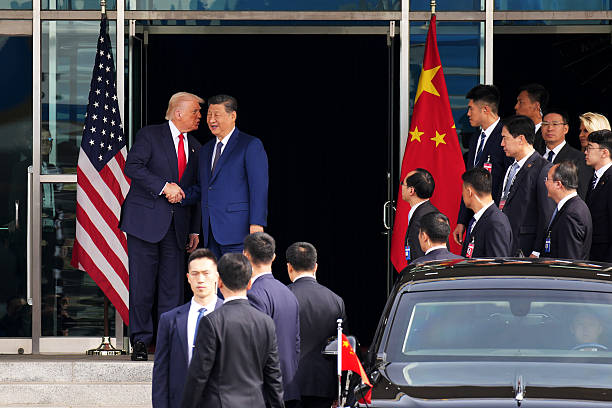
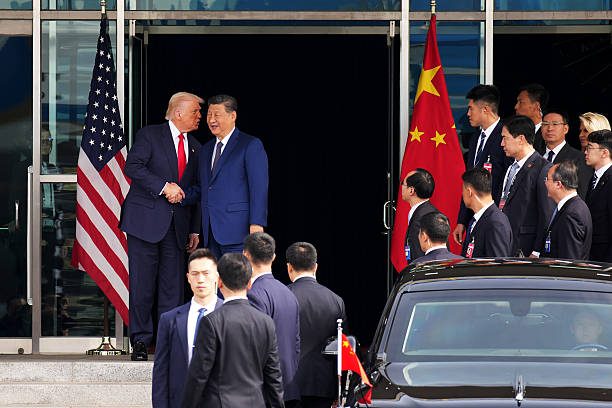
China’s latest announcement comes against the backdrop of ongoing trade negotiations with the United States, following years of strained relations triggered by former President Donald Trump’s sweeping tariffs on Chinese goods. During an October 30 meeting in South Korea, Trump and Chinese President Xi Jinping signaled a tentative thaw, agreeing to roll back several retaliatory measures that had defined their prolonged tariff confrontation.
Beijing’s decision must also be read through the lens of its strategic dominance in critical minerals—resources essential to industries ranging from consumer electronics to defense systems. Although gallium, germanium, and antimony are not formally categorized as rare earths, they form the backbone of key technological supply chains. China’s near-monopoly in these materials underscores its leverage: according to a 2024 EU report, it produces roughly 94% of the world’s gallium, used in semiconductors, LEDs, and solar technologies. It also accounts for about 83% of global germanium output, a mineral vital for fiber-optic networks and infrared applications. Antimony, used in advanced batteries and military armor, similarly sits within China’s sphere of control.

In its statement, China’s commerce ministry additionally confirmed that it would lift export restrictions on graphite-related products, previously limited under dual-use controls. This reversal signals an incremental but notable de-escalatory step by Beijing following the Trump–Xi meeting.
Earlier the same day, China announced a one-year extension of its suspension of additional tariffs on U.S. imports. It further committed to halting tariffs imposed since March on soybeans and other American agricultural products—an overture likely aimed at easing tensions while securing negotiating space.