
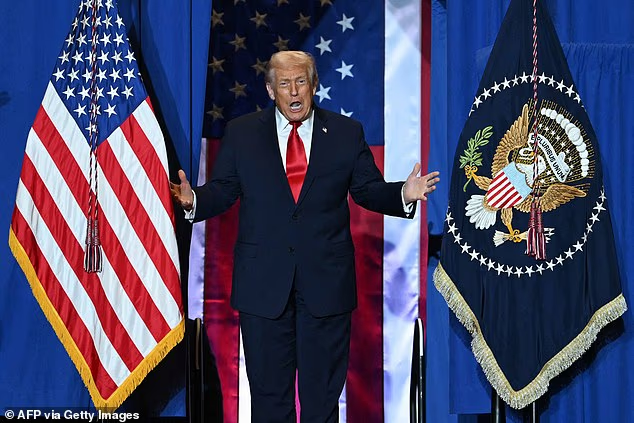
The Trump administration is preparing to require foreign visitors to submit five years’ worth of social media history as part of the process to enter the United States. The proposal represents a significant escalation in the administration’s efforts to intensify screening of travelers, following last week’s announcement of an immigration freeze affecting 19 countries.
The new requirement appeared Tuesday in the Federal Register as a “mandatory” notice issued by U.S. Customs and Border Protection. If enacted, it would apply even to tourists from countries such as the United Kingdom and Germany, which currently participate in visa-waiver programs.
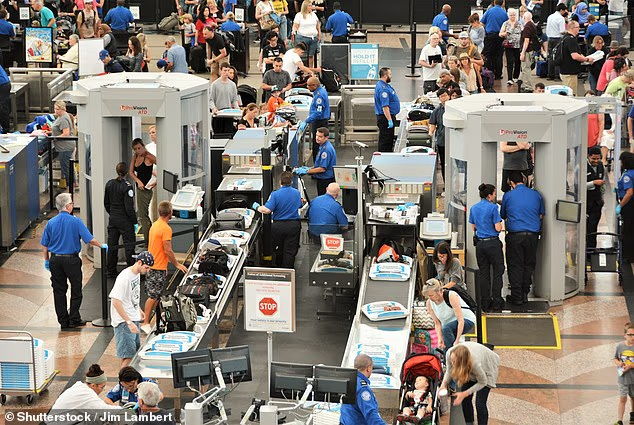
This policy builds on a State Department directive issued in June that asked incoming travelers to make their social media accounts publicly accessible. Under the latest notice, visitors would also be required to disclose their email addresses, phone numbers, and certain family details. The public has 60 days to submit comments on the proposal.
The tightened surveillance could affect massive numbers of international visitors—especially as the U.S. prepares to host the World Cup in 2026 and the Olympics in 2028. The White House and Department of Homeland Security have not yet commented on the update.
In August, the Trump administration indicated that immigration authorities would begin examining the online activity of visa and green-card applicants for signs of “anti-Americanism.” President Trump has pushed for more aggressive vetting within U.S. Citizenship and Immigration Services, extending beyond those applying for citizenship.
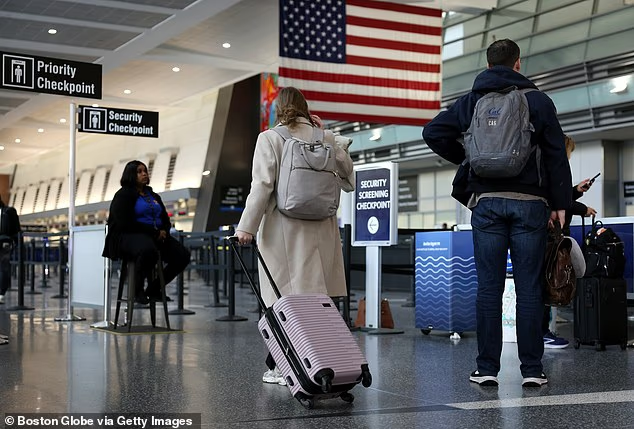
These changes accompany several earlier policy shifts, including expanded social-media screening and new criteria for evaluating whether naturalization applicants demonstrate “good moral character.” USCIS officials have been instructed to consider whether applicants have endorsed or supported views deemed anti-American, antisemitic, or connected to terrorism.
USCIS spokesperson Matthew Tragesser defended the approach, arguing that U.S. immigration benefits are a privilege reserved for those who respect the country. However, the administration has not clearly defined what qualifies as “anti-Americanism,” leaving uncertainty about how the policy will be applied in practice.
Elizabeth Jacobs, a regulatory policy director at the Center for Immigration Studies, said the government is attempting to be more explicit about what behaviors officers should weigh negatively, while still leaving decisions to individual discretion. Critics argue this vagueness could enable subjective interpretations and open the door to personal bias influencing immigration judgments.