A new report indicates that while global fatalities linked to terrorism fell to their lowest level in a decade, parts of Africa—particularly Nigeria and the Democratic Republic of Congo—experienced significant increases in violence.
According to the latest Global Terrorism Index published by the Institute for Economics & Peace, worldwide deaths from terrorism dropped by 28% in 2025, totaling 5,582. The number of attacks also declined by nearly 22%, suggesting an overall reduction in global terrorist activity.
However, this downward trend was not uniform. Nigeria recorded the largest rise in terrorism-related deaths, with fatalities increasing by 46%—from 513 in 2024 to 750 in 2025. This surge placed the country fourth on the index, behind Pakistan, Burkina Faso, and Niger.
Nigeria continues to face a complex security environment involving multiple armed actors. Extremist organizations such as Boko Haram and its affiliated factions remain active, alongside ethnic militias and criminal groups commonly described as bandits. Emerging groups, including the Lakurawa faction, have added to the evolving threat landscape.
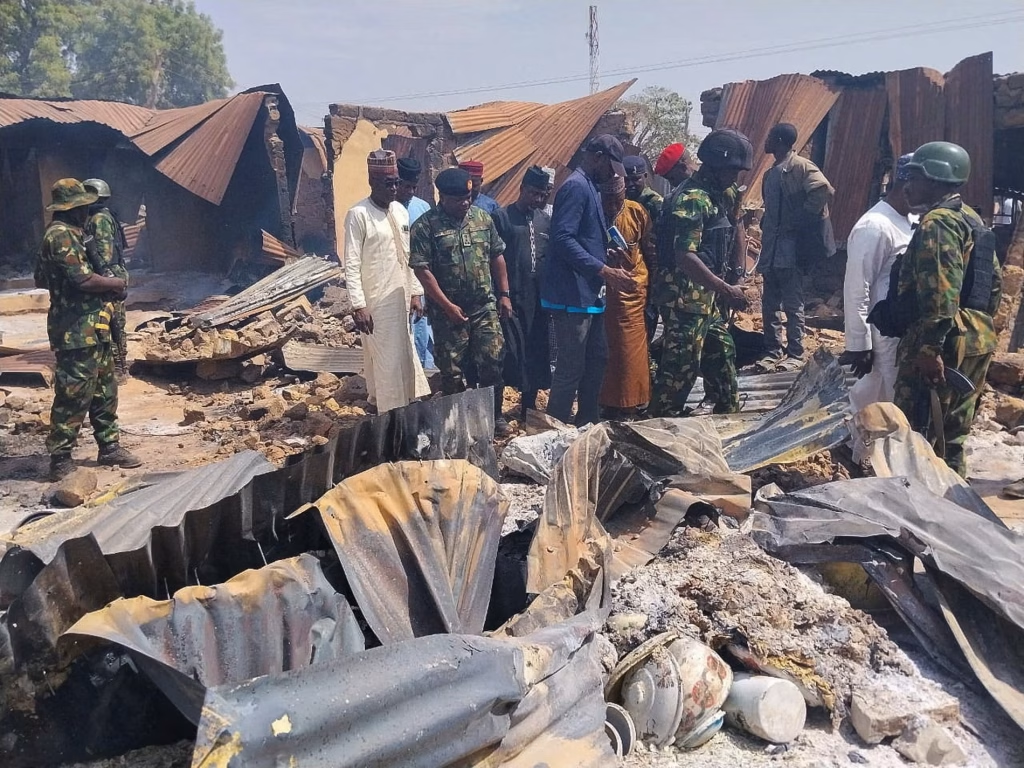
Recent incidents underscore the severity of the situation. In February, an attack in Kwara State near the Benin border resulted in 162 deaths, marking one of the deadliest events in recent years. In the northeast, security forces reported repelling an assault on a military base in Borno State, with dozens of insurgents killed. This followed a series of suicide bombings in Maiduguri that left at least 23 people dead and over 100 injured.
A similar escalation was observed in the Democratic Republic of Congo, where terrorism-related deaths rose by nearly 28%, from 365 to 467. The increase was largely attributed to the activities of the Allied Democratic Forces, which is linked to the Islamic State.
These regional increases contrast with trends elsewhere. In Western countries, terrorism-related deaths rose sharply in percentage terms—by 280%—though the total number remained relatively low at 57 fatalities. The United States recorded 28 deaths, its highest figure since 2019. Analysts suggest this rise is increasingly associated with youth radicalization and attacks carried out by individuals acting alone.
Steve Killelea, founder of the Institute for Economics & Peace, warned that these divergent trends may signal broader instability. He noted that fragmentation in the global order could undermine progress made in reducing terrorism over the past decade.
The report highlights the Sahel region as the focal point of global terrorism, accounting for more than half of all terrorism-related deaths in 2025, despite a year-on-year decline. Notably, Burkina Faso recorded the largest reduction in fatalities, with deaths falling by approximately 50% and civilian casualties decreasing significantly.
Experts attribute this shift partly to evolving strategies by militant groups such as Jamaat Nusrat al-Islam wal Muslimeen (JNIM), an al-Qaida affiliate. The group appears to be focusing less on civilian targets and more on military and political objectives, potentially as part of an effort to consolidate territorial control and build local support.
This tactical adjustment aligns with a broader pattern of increasingly coordinated and sophisticated attacks on military installations across the region. The use of drone technology has also expanded, with JNIM reportedly deploying drones in over 100 incidents in recent years. Meanwhile, the Islamic State West Africa Province (ISWAP) has also utilized drones for both attacks and reconnaissance operations.
Additionally, the report notes a growing concentration of terrorist activity in border regions, particularly in the central Sahel tri-border area and around the Lake Chad Basin, underscoring the transnational nature of the threat.