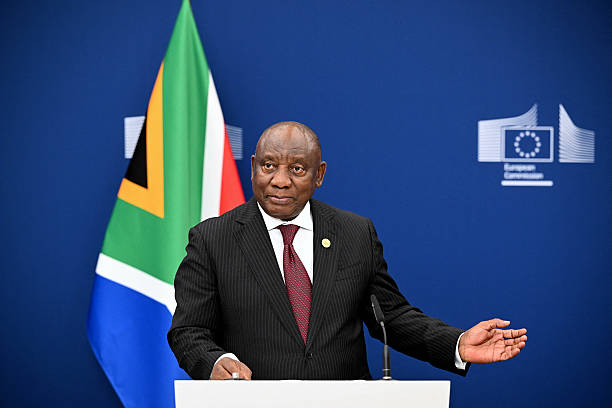
Former U.S. President Donald Trump’s recent remarks on South Africa have reignited controversy, centering on his claims that the country’s white minority, particularly Afrikaner farmers, are victims of persecution and discriminatory land policies. These allegations have been cited among the reasons for Washington’s decision to boycott the 2025 G20 Summit in Johannesburg, a move South African President Cyril Ramaphosa brushed off as inconsequential. “It is their loss,” he told reporters, signaling Pretoria’s determination to proceed undeterred.
Analysts argue that Trump’s stance is emblematic of his administration’s broader posture toward Africa—marked by confrontational rhetoric and transactional diplomacy. Similar approaches have surfaced in Nigeria, where U.S. officials have publicly pressed leaders to align more closely with American strategic interests, often criticizing policies that diverge from Washington’s agenda or lean toward China.
The Johannesburg G20 Summit, the first ever hosted on African soil, represents a landmark moment for the continent. Beyond ceremonial symbolism, the gathering offers Africa an opportunity to reshape its role in global governance—from being a peripheral policy subject to becoming a co-architect of international economic and political frameworks.
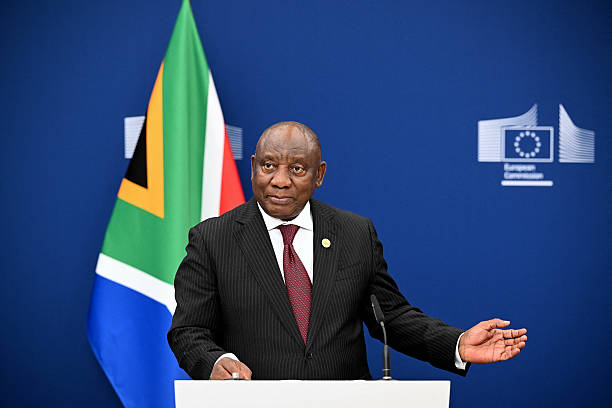
Under the theme “Solidarity, Equality, Sustainability,” South Africa aims to place Africa’s long-marginalized priorities at the center of global discourse: debt relief, climate finance, trade equity, and investment reform. Ramaphosa underscored the urgency of these issues, declaring:
“Debt stress constrains growth, climate impacts hit us disproportionately, and global trade rules must be fairer. These are not abstract concerns—they affect millions of lives across our continent.”
Expectations are high that the summit will push for reforms to international financial institutions, expanded climate adaptation funding, and mechanisms to make global finance more inclusive of developing economies.
Yet, beneath the diplomatic optimism lies a more complex geopolitical chessboard. The U.S. boycott underscores enduring tensions between Western powers and an increasingly assertive Global South. Meanwhile, China has seized the moment to amplify its influence, with Foreign Minister Wang Yi affirming Beijing’s support for Africa’s leadership ambitions:
“We must listen to Africa, take its concerns seriously, and ensure the Johannesburg Summit reflects its distinct voice.”
This rivalry places African leaders in a delicate balancing act—courting investment and partnerships from both East and West while safeguarding the continent’s policy autonomy.
On the ground, Johannesburg faces practical tests of its own. Persistent power shortages, water constraints, and infrastructure limitations threaten to overshadow the event’s political significance. A smooth execution could burnish South Africa’s reputation as a capable host of major international gatherings; logistical failures could, conversely, reinforce negative perceptions and distract from substantive policy outcomes.
Ultimately, the 2025 G20 Summit may prove a turning point in how the world perceives Africa’s agency. For decades, the continent has been framed as a passive recipient of aid and external decision-making. Johannesburg offers a chance to recast that narrative—to demonstrate that Africa is not merely hosting the global conversation but helping lead it.
The question remains: will commitments to debt relief, climate justice, and equitable growth yield concrete results—or fade as diplomatic formalities? Whatever the outcome, the summit’s legacy could define Africa’s place in the evolving global order, signaling that its voice is no longer peripheral but pivotal.