
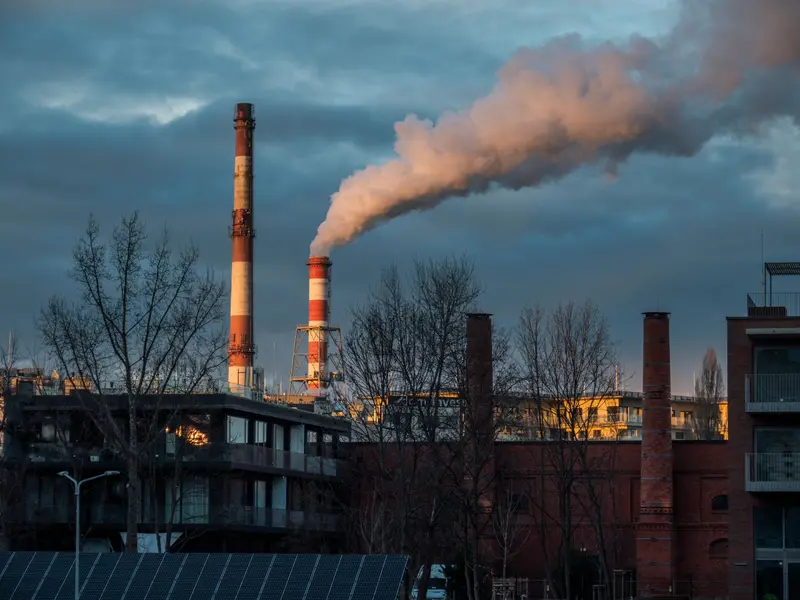
Global emissions from fossil fuels — oil, coal, and gas — are projected to reach an unprecedented peak by 2025, according to new data released on Thursday (Nov 13). The findings suggest that limiting global warming to 1.5°C above pre-industrial levels may now be slipping out of reach.
The latest Global Carbon Budget report, unveiled as world leaders gather for COP30 in Brazil’s Amazon region, forecasts a 1.1 percent rise in fossil fuel-related CO₂ emissions in 2025 compared with the previous year. This increase would push global emissions to approximately 38.1 billion tonnes — the highest level ever recorded.
The report highlights a stark contradiction: despite the rapid expansion of renewable energy, the global transition away from fossil fuels remains too slow to offset growing energy demand. Scientists estimate that only about 170 billion tonnes of carbon can still be emitted before Earth surpasses the 1.5°C threshold — roughly equal to four years of current emission levels.
“At the present pace, the world will exhaust the carbon budget for 1.5°C within four years — making that target effectively unattainable,” warned Pierre Friedlingstein of the University of Exeter, who led the study.
The 2015 Paris Agreement called on nations to limit warming to well below 2°C, ideally to 1.5°C. Yet, despite pledges and policy shifts, emissions continue to rise in most regions. “Collectively, the world is failing to deliver,” said Glen Peters from the Centre for International Climate Research (CICERO). “Every country must step up — and step up faster.”
China, the world’s largest emitter, recorded no significant increase in fossil fuel emissions this year, largely due to the expansion of solar and wind power. However, Peters cautioned that it is too soon to conclude that China’s emissions have peaked, as coal consumption remains stubbornly high. “The balance is beginning to tilt toward a decline, but that transition will take time,” he added.
This new data underscores a deep structural problem in the global energy economy. While renewable technologies are scaling rapidly, they have yet to displace fossil fuels at a pace consistent with the Paris Agreement. The persistence of coal use, uneven policy enforcement, and rising global energy demand — especially in developing economies — continue to erode progress.
The warning that the carbon budget for 1.5°C could be depleted within four years should be interpreted as a call for transformative, not incremental, change. Without aggressive decarbonization, including reductions in oil and gas use and large-scale investment in clean infrastructure, the 1.5°C target risks becoming a symbolic rather than achievable goal.