
India has successfully tested the K-4 submarine-launched ballistic missile (SLBM) from its nuclear-powered submarine INS Arighaat, demonstrating a significant advancement in its undersea nuclear strike capabilities. The launch occurred on Tuesday (December 23) in the Bay of Bengal, near the coast of Visakhapatnam. Defence officials confirmed that the missile was fired across its full operational range of approximately 3,500 kilometers.
INS Arighaat, the country’s second Arihant-class nuclear-powered ballistic missile submarine, entered service last year. With the K-4 test, India continues to solidify its status among the limited number of nations with a complete nuclear triad, consisting of land-, air-, and sea-based delivery systems.
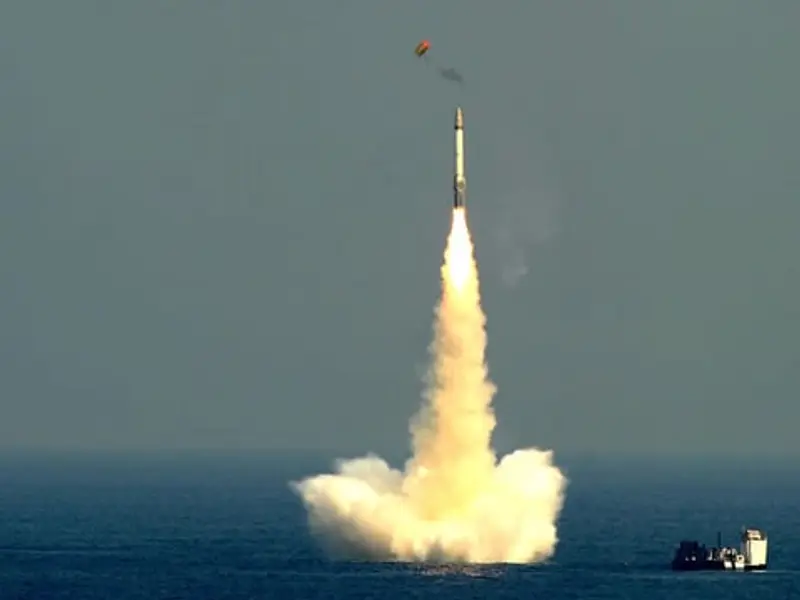
The K-4, which joined the Indian Navy on August 29, 2024, is an adaptation of the Agni-III missile, modified for underwater launch. The system is designed to eject from a submarine silo, ascend through the water column, and ignite its rocket motor once it reaches the surface. Capable of carrying a nuclear warhead weighing up to 2.5 tonnes, it can be deployed from Arihant-class submarines that are built for extended stealth operations across large oceanic areas, supporting a credible second-strike capability.
Submarine-launched missiles like the K-4 are considered a highly secure component of India’s nuclear arsenal, providing strategic deterrence in situations where land-based forces might be vulnerable. The K-4 also bridges the range gap between the shorter-range K-15 missile and longer-range SLBMs that India is developing for future deployment. The missile series is named in honour of former President APJ Abdul Kalam, a key figure in India’s missile development program.