The United States has urged European members of NATO to assume primary responsibility for the continent’s conventional defence, citing the increasing possibility of simultaneous security challenges across different regions of the world.
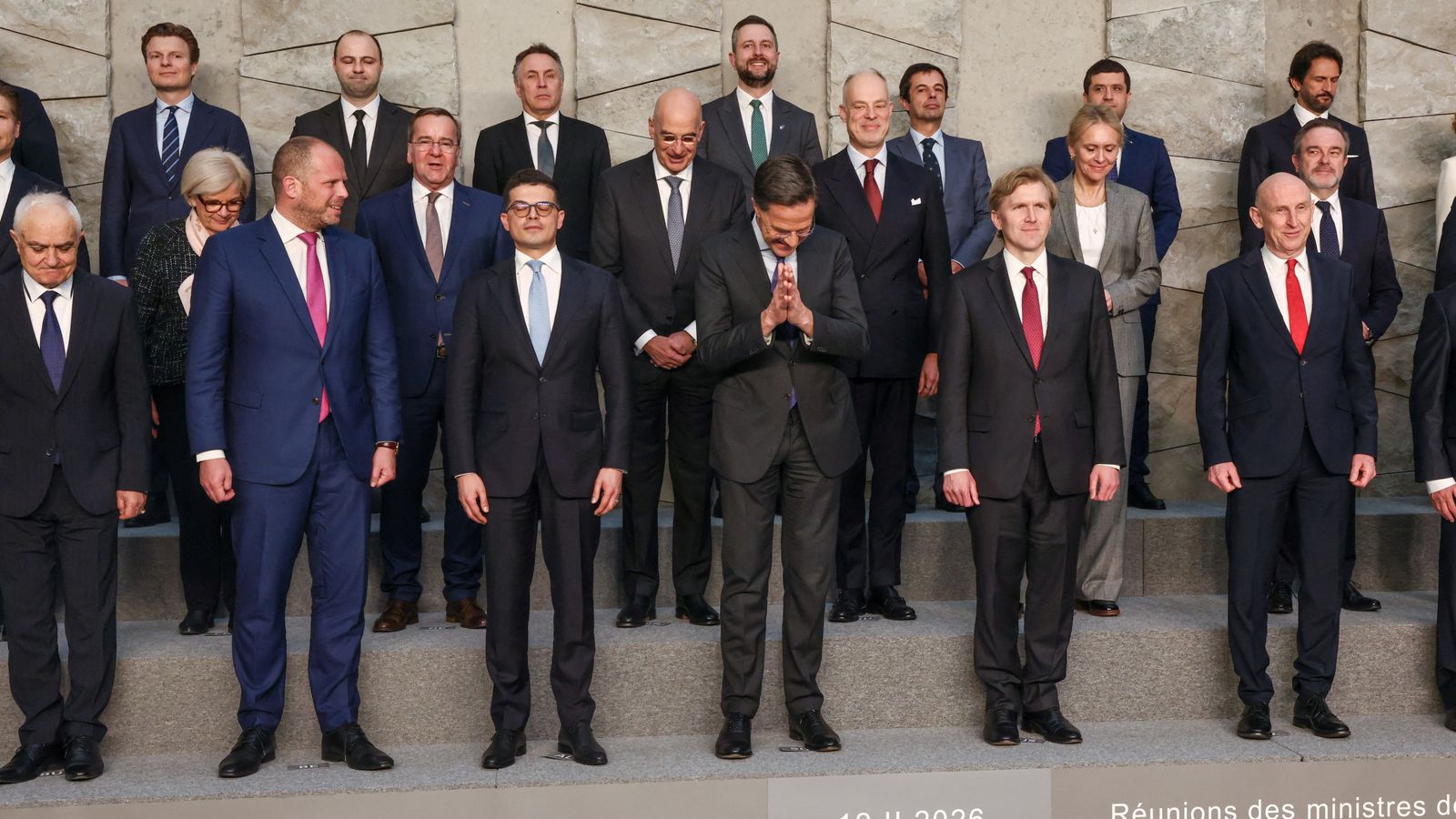
Speaking at a meeting of NATO defence ministers in Brussels, Elbridge Colby, representing Secretary of Defense Pete Hegseth, said the alliance must be prepared for potential adversaries to act concurrently in multiple theatres. He argued that such a scenario would require the United States to prioritise areas where its military capabilities are uniquely positioned to respond.
Colby stated that the global environment that shaped NATO’s post-Cold War posture has fundamentally changed. He noted that the period of relative strategic dominance following the Cold War had given way to renewed geopolitical competition, with major powers once again employing large-scale military force.
Under President Donald Trump, Colby said, US strategy places particular emphasis on defending the American homeland and safeguarding national interests in the Western Hemisphere. At the same time, he stressed that the United States and its allies must be prepared for coordinated or opportunistic actions by rival states in different regions.

NATO Secretary-General Mark Rutte has previously highlighted the possibility of a scenario in which China could move against Taiwan while Russia tests NATO’s collective defence commitments under Article 5 by targeting a European member state. Such developments, Colby suggested, could limit the extent of US military support available to European allies in the event of a crisis on the continent.
Addressing concerns about Washington’s long-term commitment to NATO, Colby rejected the notion that the United States was distancing itself from the alliance. Instead, he characterised the policy direction as a reaffirmation of NATO’s original purpose when it was founded in 1949, emphasising deterrence and shared responsibility among members.
He argued that, following the end of the Cold War, NATO’s focus shifted toward operations beyond its territory, including campaigns in Afghanistan and Iraq. In his view, the alliance must now adapt once again to evolving security conditions, a transition he described as a move toward a more strategically focused “NATO 3.0.”
Colby welcomed recent commitments by several allies to increase defence and broader security spending toward 5% of gross domestic product, exceeding the alliance’s longstanding 2% benchmark for defence expenditure. However, he underscored that European leadership in defence planning and capability development must be sustained over time.
“Europe must assume primary responsibility for its own conventional defence,” Colby said, framing the shift as a pragmatic response to the current strategic landscape rather than a political or ideological departure.
He concluded by emphasising that the United States would continue to engage in European security, while prioritising regions and challenges where American military power is considered indispensable.