
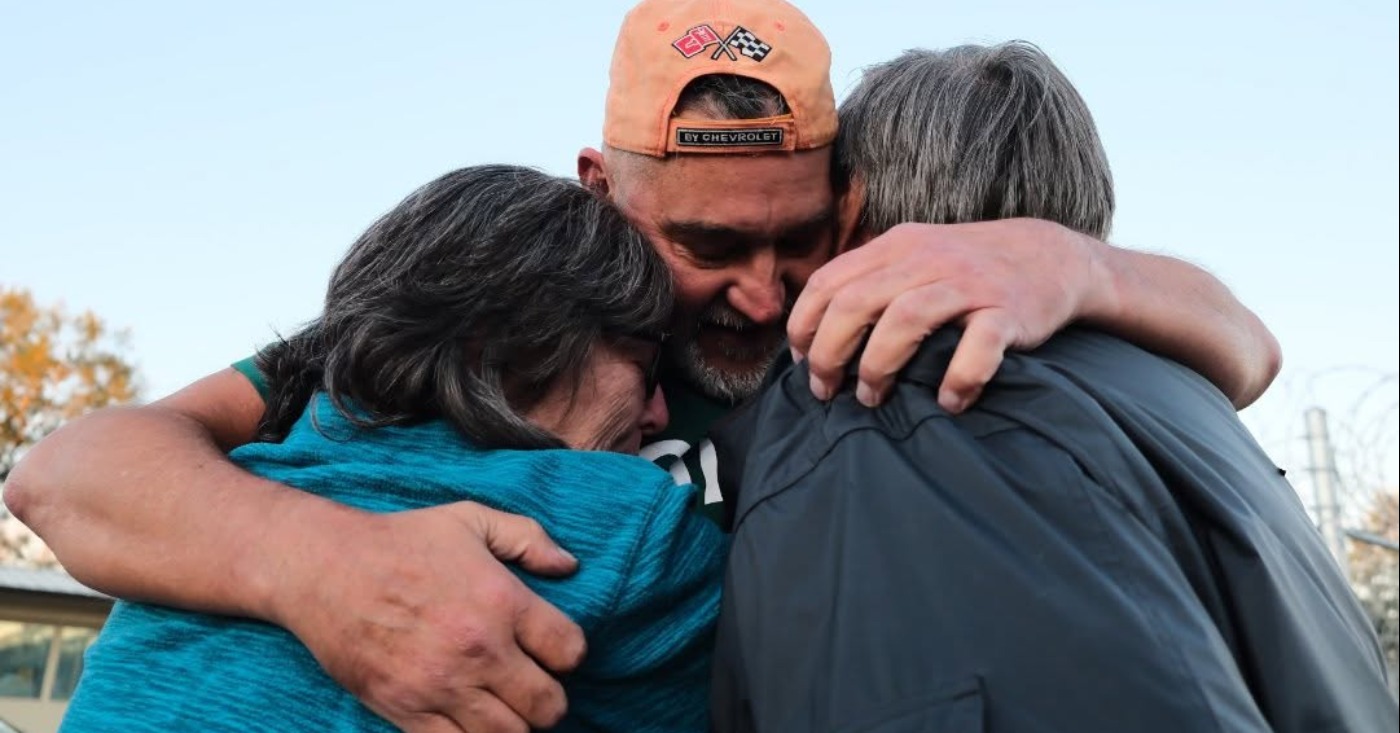
The Louisiana Supreme Court has unanimously upheld the decision to overturn the 1998 murder conviction of former death row inmate Jimmie “Chris” Duncan, bringing an end to nearly three decades of legal uncertainty and officially restoring his freedom.
In a unanimous opinion issued Monday, the state’s highest court affirmed a lower court’s ruling that vacated Duncan’s conviction in the death of his former girlfriend’s two-year-old daughter, Haley Oliveaux. The court concluded that the forensic evidence central to the prosecution’s case was fundamentally unreliable.
Writing for the seven-member bench, Justice Cade R. Cole said newly presented evidence dismantled the factual basis on which prosecutors had secured Duncan’s conviction.
“The post-conviction evidence undermined the core factual premises on which the state depended,” Cole wrote in the ruling.
Chief Justice John Weimer and another justice filed separate concurring opinions supporting the court’s decision.
Duncan, now 57, had spent years on Louisiana’s death row and recently faced the possibility of execution as state officials moved to resume capital punishment after a 15-year hiatus.
The prosecution’s case relied heavily on bite mark analysis performed by forensic dentist Michael West and pathologist Steven Hayne. Their testimony claimed that marks found on Haley’s body matched Duncan’s teeth, providing the only physical evidence linking him to the alleged crime.
Since Duncan’s trial, bite mark identification has been widely rejected by the scientific community as unreliable, and the forensic methods employed by West and Hayne have faced sustained criticism from legal experts, scientists and courts. Their work has been associated with multiple wrongful convictions, with Duncan becoming the last inmate on death row whose conviction depended on their forensic testimony.
In reviewing the case, the Supreme Court examined video footage from West’s 1993 examination of Haley that jurors never saw during the original trial. According to the court, the recording shows West pressing and moving a mold of Duncan’s teeth across the child’s body in a manner that appeared to create impressions rather than document existing bite marks.
Cole cited defense expert testimony describing the conclusions drawn from the examination as “scientifically indefensible” and noted that the bite patterns presented at trial were physically impossible for a human bite.
West has consistently defended his methods, maintaining that he employed what he described as a “direct comparison” technique by placing dental molds against suspected injury sites.
In a strongly worded concurring opinion, Chief Justice Weimer compared the forensic practices used in Duncan’s prosecution to the discredited “trial by water” methods once employed during 17th-century witch trials.
He argued that both reflected deeply flawed approaches that modern society now recognizes as lacking scientific credibility, warning that capital punishment demands the highest evidentiary standards because wrongful executions cannot be reversed.
Police arrested Duncan in December 1993 after Haley drowned while he was babysitting her at the West Monroe home he shared with her mother. Duncan told investigators he had briefly left the child in the bathtub to wash dishes downstairs before returning to find her unresponsive in the water. She later died at a hospital.
Authorities initially charged Duncan with negligent homicide but upgraded the case to first-degree murder after West and Hayne concluded that Haley had been sexually assaulted and intentionally drowned. Following a two-week trial in 1998, a jury convicted Duncan and sentenced him to death.
Over the following years, post-conviction attorneys uncovered evidence challenging the prosecution’s theory. Independent experts concluded Haley’s death was consistent with an accidental drowning rather than homicide, while a jailhouse informant whose testimony had implicated Duncan later withdrew his claims.
Former Ouachita Parish Judge Alvin Sharp overturned Duncan’s conviction in April last year, finding that the newly uncovered evidence undermined confidence in the verdict. Duncan was released on bail in December while prosecutors appealed the ruling.
District Attorney Steve Tew maintained throughout the appeal that Duncan remained responsible for Haley’s death, arguing during oral arguments that the absence of bite mark evidence did not alter the fact that Duncan was alone with the child when she died. Prosecutors had indicated they would consider retrying Duncan if the conviction was not reinstated.
Members of Haley’s family, including her mother, Allison Layton Statham, have publicly supported Duncan’s release and the reversal of his conviction. They have also criticized prosecutors, saying repeated attempts to discuss concerns about the case went unanswered.
Following the Supreme Court’s decision, Duncan’s legal team described the ruling as a significant victory for justice, arguing that the collapse of the forensic evidence leaves no legitimate basis for pursuing the case further.