A traditionalist Catholic movement is preparing to consecrate four bishops without papal approval next week, setting the stage for a renewed confrontation with Pope Leo XVI and deepening one of the Catholic Church’s longest-running internal disputes.
The Society of St. Pius X (SSPX) has announced that the consecration ceremony will take place on July 1 at its seminary in Switzerland, despite repeated warnings from the Vatican that such an act would trigger automatic excommunication for those involved.
The planned ordinations underscore the group’s continued rejection of full communion with Rome, signalling that it is prioritising its independent identity over reconciliation with the Holy See.
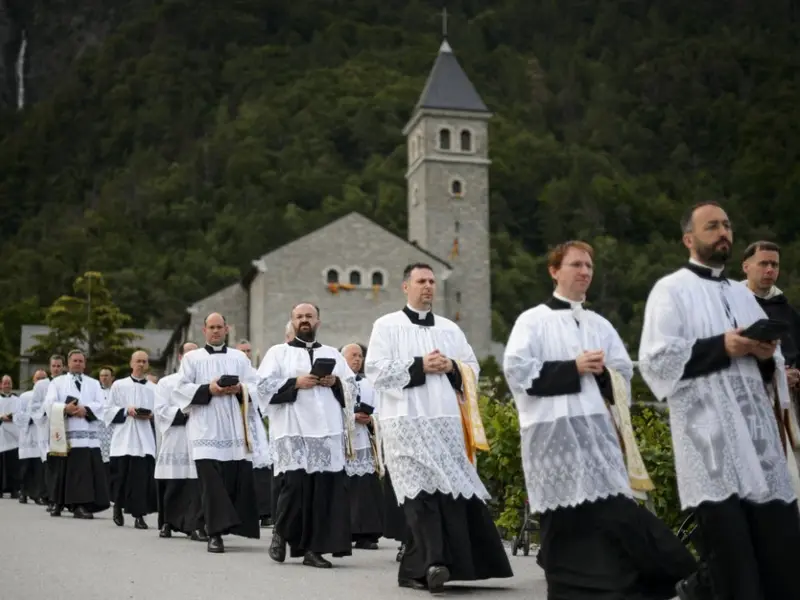
SSPX Superior General Fr. Davide Pagliarani defended the decision, describing the move as a response to what he called a “state of necessity” for safeguarding the Church’s traditional sacramental life.
“The ceremony of July 1st will have no other purpose than to ensure the continued administration of the sacraments of Holy Orders and Confirmation, together with those sacramentals reserved to bishops, according to the traditional rite of the Holy Roman Church and the immemorial Faith,” Pagliarani said.
The organisation has turned the consecration into a major international gathering, arranging a four-day programme at its Swiss seminary that includes live online broadcasts, accommodation services, organised transport and hospitality for supporters expected to attend.
The Vatican has maintained that episcopal consecrations carried out without papal approval violate Church law and incur automatic excommunication. Despite previous efforts by Pope Leo XVI to restore relations with the group, longstanding theological disagreements have prevented any breakthrough.
Religious scholars argue that the SSPX has increasingly embraced its role as an independent traditionalist movement rather than seeking reintegration into the institutional Church.
Massimo Faggioli, professor of theology at Villanova University, described the movement as “Traditionalism 2.0,” saying it has successfully combined traditional Catholic practices with modern digital outreach to strengthen its global identity. According to Faggioli, the group’s strategy is centred on preserving its distinct ideological position rather than returning to full communion with the Vatican.
The roots of the conflict stretch back to the reforms introduced by the Second Vatican Council during the 1960s. The SSPX has consistently rejected many of those changes, favouring the traditional Latin Mass and arguing that post-conciliar reforms departed from authentic Catholic teaching. The group maintains that strict adherence to older liturgical and doctrinal traditions is necessary to counter what it sees as the influence of modernism within the Church.
The dispute reached a turning point in 1988 when the society’s founder, Archbishop Marcel Lefebvre, consecrated four bishops without papal authorisation, prompting the Vatican to impose excommunications and leaving the organisation without canonical recognition.
Despite its irregular status within the Catholic Church, the SSPX has continued to expand its international presence. The society now includes two bishops, 733 priests, 264 seminarians, 145 religious brothers, 88 oblates and 250 religious sisters drawn from around 50 countries, reflecting its sustained appeal among Catholics committed to traditionalist worship and doctrine.