A new international media study has found that coverage of violence against women, girls, and misogynistic harassment has fallen to its lowest level in recent years, even as high-profile abuse cases and technology-enabled forms of gender-based violence continue to grow.
The research reviewed 1.14 billion online news stories published globally between 2017 and 2025. It found that reports containing terms linked to misogynistic abuse accounted for just 1.3% of all online news coverage in 2025, the lowest share recorded during the period studied. Coverage had previously reached its highest point in 2018, at 2.2%, during the peak of the #MeToo movement.
In Africa, where several conflicts have involved widespread allegations of sexual violence, related coverage fell to a nine-year low of 1.18% in 2024.
Professor Julie Posetti, chair of the Centre for Journalism and Democracy at City St George’s, University of London, said the findings raised concerns about the media’s response to a significant global issue. She argued that the decline in reporting reflected broader shortcomings in addressing violence against women and misogyny.
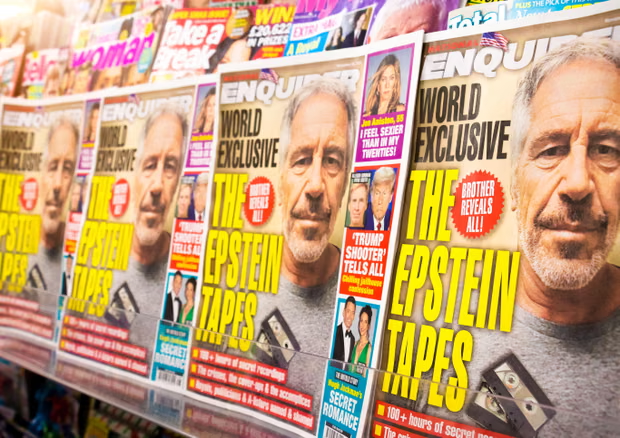
The report, described as the first global study of its kind, also examined media reporting connected to Jeffrey Epstein from 2017 to February 2026. Among nearly one million Epstein-related articles, only 0.1% used the phrase “violence against women.” By contrast, around one quarter referred to “victims,” while 26% mentioned themes such as power, wealth, elites, or corruption.
Researchers said this suggested that much of the coverage focused on scandal and influence rather than examining the gender inequality and power imbalances that can enable abuse.
Lead author Luba Kassova said reporting on the Epstein case largely lacked a gender-equality framework, limiting public understanding of the structural causes behind such crimes.
The study also found that countries with high levels of sexual violence do not necessarily receive corresponding levels of media attention. It warned that declining coverage may leave important public concerns insufficiently addressed.
At the same time, researchers noted that digital platforms have expanded opportunities for online gender-based abuse. Previous studies cited in the report suggest that as many as 60% of women worldwide have experienced some form of online harassment or abuse.
Where misogyny-related stories are covered, male voices were found to dominate. According to the study, men were quoted 1.5 times for every woman quoted in stories on misogyny, a disparity researchers said has widened over time.
Sarah Macharia of the Global Media Monitoring Project said previous monitoring had shown similar patterns, with male experts more frequently cited than female experts in stories about gender-based violence.
The report also noted a sharp increase in references to the term “gender ideology,” a politically contested phrase often used in debates over gender rights and equality. Mentions of the term increased 42-fold between 2020 and 2025, largely driven by US media outlets.
Researchers said this shift may indicate growing media attention toward ideological conflict rather than direct reporting on violence and abuse.
Among its recommendations, the report called for greater involvement of women journalists and editors in shaping coverage, and for placing survivors’ experiences at the center of reporting. It also urged media organisations to go beyond reporting individual criminal cases by examining deeper factors such as gender inequality, abuse of power, and cultural norms that may contribute to violence.
Professor Posetti said some media organisations had made progress, but argued that broader structural change across the industry remained necessary.